
SI Joint Pain Treatment in Virginia Beach
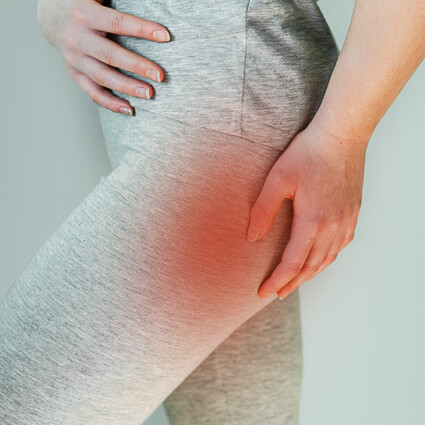 SI joint pain is one of the most commonly misdiagnosed sources of lower back and pelvic discomfort. Patients come in convinced they have sciatica; others have been told it’s a disc issue. At Body Logic, we hear this regularly, and we know how to tell the difference, find the real source, and treat it properly.
A Small Joint with an Outsized Role
The sacroiliac joints sit at the back of the pelvis, where the two large pelvic bones meet the sacrum, the triangular-shaped bone that the rest of your spine sits on top of. They may not move through a wide range of motion, but they need to move in sync with each other to support normal bending, walking, and rotation through the pelvis.
When one or both SI joints become stuck or misaligned, the result is pain focused at the dimples of the lower back, sometimes spreading into the glutes. Patients often call this “sciatica,” but true sciatica causes symptoms much farther down the leg. SI joint pain stays local, and that distinction matters a great deal when choosing the right treatment.
What Causes this Dysfunction to Develop
A lot of what we see at Body Logic traces back to the way Virginia Beach patients actually live: physically active, but also logging long hours at a desk or behind the wheel. Common contributors to SI joint dysfunction include:
- Yard work, heavy lifting, or a sudden spike in activity after time off
- Athletic training, repetitive motion, or high-load movements without adequate pelvic stability
- Pregnancy and postpartum changes that shift joint alignment and laxity
- Sleeping positions that keep the pelvis rotated through the night
Weak glutes and tight hip flexors that leave the SI joints absorbing load they weren’t designed to handle alone
What SI Joint Pain Feels Like
The hallmark is a deep ache in the dimples of the lower back. Hinging forward is a common trigger because the SI joints need to move together to support that motion, and when one side is stuck, irritation builds quickly.
Sitting for long periods tends to make it worse, and driving is a surprisingly common aggravator. Most people naturally sit with one leg extended toward the pedals and the other tucked underneath, keeping the pelvis rotated throughout the trip. A short commute may be manageable. A longer drive makes it undeniable.
When It’s Time to Get Checked
If pain keeps coming back with the same activities, disrupts sleep, or has been present for more than a few days, it is worth having evaluated. The longer a joint stays restricted, the more the surrounding muscles compensate, and the harder that pattern becomes to reverse on its own.
Targeted Care to Get Results
An evaluation at Body Logic includes palpation of the SI joints, postural assessment, orthopedic testing, and manual muscle testing. Plans are built around findings and may include joint manipulation, soft tissue therapy, kinesio taping, laser therapy, massage therapy, and electrical muscle stimulation. Targeted home stretches and strengthening exercises are part of every plan to build stability that holds between visits. Most patients notice real improvement within the first couple of visits.
Find Out What’s Actually Driving Your Pelvic Pain
When SI joint pain is properly addressed, patients are often surprised by how much it has been shaping their daily movement. Getting through a full day without that familiar ache, handling a long drive without bracing yourself, or returning to training without modifying around the pelvis; that’s what getting the right care actually looks like.
Call (757) 427-0355 to schedule your evaluation.
